
The Religion of the Empire
Vainqueur the DragonThis flow traces how gods, cults, blessings, angels, and commercial churches compete to define the moral and economic future of Murmurin.
increasing Bearing strength in each event
 decreasing
Bearing strength in each eventdecreasingThe Shared Temple
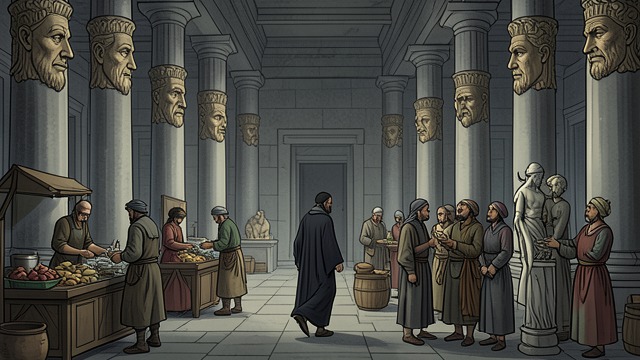
The Shared Temple
Gods in Competition
Vainqueur surveys the twelve gods as if inspecting rival dragons. He recognizes worship as a form of hierarchy but cannot understand why mortals serve beings other than himself.
Religion as Infrastructure
The temple manages corpses, offerings, healing, commerce, and social order. Its gods are not distant myths but institutions competing for attention and resources.
Vainqueur enters a market of faith.
The Moon Man Cult
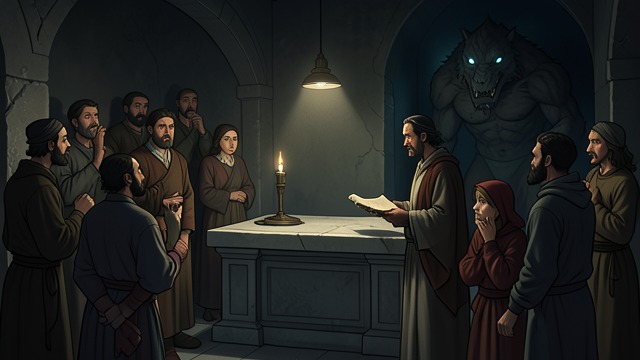
The Moon Man Cult
Misunderstood Worship
The Murmurin Moon Man Cult sacrifices outsiders because it cannot understand its absent deity or summoned Moon Beasts. Religious violence grows from communication failure rather than clear divine command.
A New Prophet
Victor Dalton becomes a translator and therefore a prophet. His interpretation gives the cult new rules, though the community immediately misreads them.
The episode shows faith as a dangerous feedback loop.
Isengrim's Exception
Isengrim's Exception
Hunting as Morality
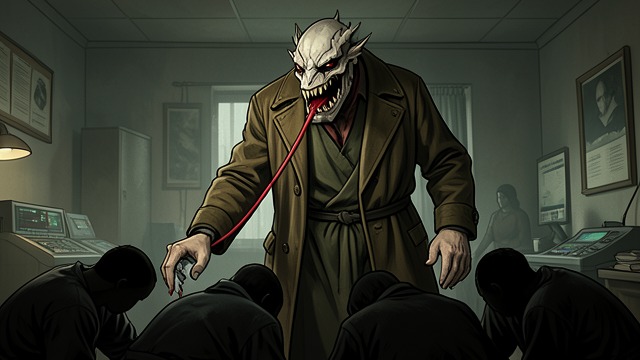
Chocolatine invokes Isengrim's Seventh Commandment to justify hunting Demons and Undead for pleasure and profit. The god's ethic preserves a boundary between acceptable predation and destructive excess.
A Flexible Doctrine
The commandment allows the monster community to treat fiends as ecological exceptions. Its morality is not human universalism but a balancing system adapted to predatory life.
Religion makes the grotesque socially sustainable.
Shesha's Contract

Shesha's Contract
Commerce Beyond Death
Shesha offers resurrection through a result-based contract. Her power is dependable, but the cost remains so high that even Vainqueur Knightsbane experiences financial devastation.
The Goddess as Creditor
Shesha's relationship with Vainqueur becomes a debt structure extending beyond life. Her influence enters Murmurin because the empire's most intimate emergency becomes a commercial transaction.
Faith and finance become inseparable.
Angelic Competition

Angelic Competition
Heaven's Sales Pitch
Miel tries to secure Victor Dalton's soul through insurance, moral pressure, and subscription plans. Heaven presents itself as benevolent but speaks in the language of customer acquisition.
A Multiplanar Market
Hell, Heaven, Shesha, and the Moon Man all compete for Victor's afterlife. His soul becomes a diplomatic asset because his relationships connect several powers.
The novel makes salvation another contested economy.
during Vainqueur's first visit to Haudemer's temple
during Victor's capture by Murmurin's cult
during the demon-summoning training
during Victor Dalton's death
during the epilogue after Victor's death
